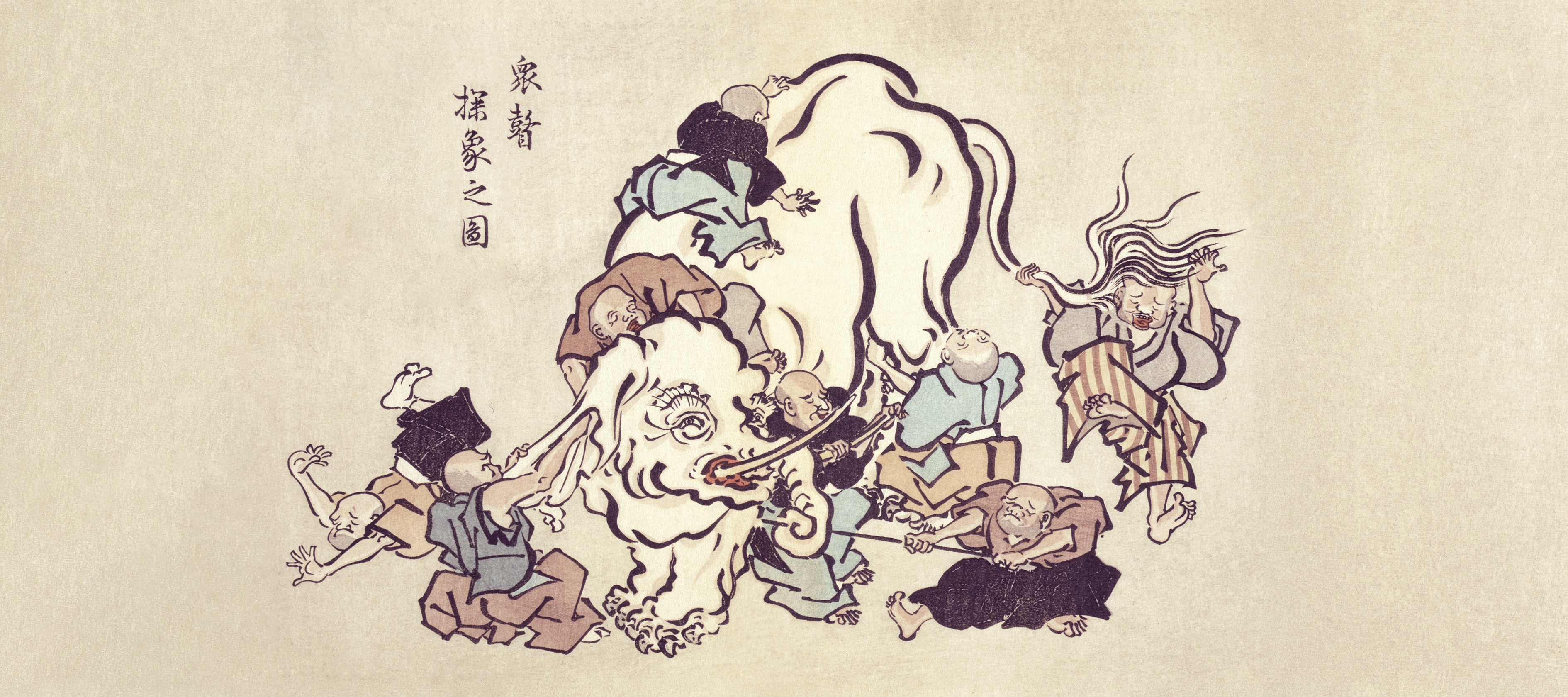

An old parable tells the story of a group of blind men trying to describe the nature of an elephant.
The first, feeling the animal’s trunk, said the elephant was like a snake. The second, who hugged its leg, said it was a tree. For the third, who encountered the elephant’s side, it was a huge wall. The fourth, handling the ear, said: it’s a fan. The fifth, who grabbed the tail, was convinced it was a rope.
Each was so certain of what they had felt, and they couldn’t understand why the others hadn’t reached the same conclusion. They fell into disagreement, accused each other of everything, and chaos ensued.
This little story has served various traditions — Buddhism, Jainism, Hinduism, Sufism — and for centuries has illustrated the limitations to which we are subject in our sincere attempts to grasp the world around us.
Our starting point is the belief that over millennia, the various cultures of the world have had fragmentary visions of reality, and that each has excelled in describing a part of it.
There is no more insightful method for grasping a subject than to reconcile — or at least bring together — these fragments. We have the privilege of living in a time when cultures are no longer closed books; it is up to us to make them vibrate in all their depth.
It is also part of our ambition to open up and shed light on those few niches of knowledge that remain relatively hidden, absent from public spaces, and reserved for a select community.





.svg)
.svg)
.svg)